The Social Brain: How Connection Made Us Human — and Still Does.
The Social Network That Saves Us
Connection: The First Technology
Picture it: 200,000 years ago, a small group of early humans huddled by a fire.
They weren’t the fastest, strongest, or fiercest creatures on the plains.
But they were the best at something else entirely — organising together.
Our ancestors evolved not to survive alone, but to connect.
Their brains expanded not just to solve puzzles or hunt efficiently, but to track friendships, build alliances, and manage trust across tribes.
Connection wasn’t a luxury of evolution.
It was evolution.
The Social Brain Hypothesis
According to the Social Brain Hypothesis, it wasn’t toolmaking that made our brains grow — it was people.
Managing complex relationships demanded more neural real estate than cracking nuts or throwing spears ever could.
Neanderthals had large brains, but they lived in smaller, tighter groups.
Homo sapiens built wider, more fluid networks — exchanging ideas, stories, and skills over long distances.
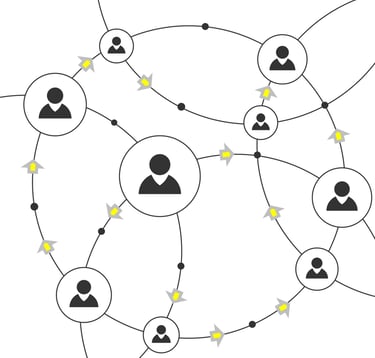
That web of weak ties became our secret weapon.
In evolutionary terms, we didn’t out-think the competition — we out-linked them.
Alloparenting: The Village That Built the Mind
Big brains come with a big price tag.
They’re energy-hungry and slow to mature.
To afford them, we evolved a radical social system: alloparenting — cooperative child-rearing where everyone pitched in.
Grandparents, siblings, neighbours, even unrelated adults shared the load.
It freed mothers to have more children, and it gave the young access to multiple teachers, perspectives, and role models.
“We didn’t just share food. We shared knowledge, empathy, and imagination.”
This collective caregiving was more than childcare — it was the engine of culture.
It allowed humans to transmit complex knowledge across generations: how to craft tools, tell stories, manage conflict, and create belonging.
Learning became something we did together, not something we got alone.
The Network Advantage
As our groups grew, so did our intelligence.
We learned to manage webs of cooperation — who to trust, how to reconcile, how to share.
These social circuits wired our brains for relational intelligence: the capacity to coordinate, empathise, and adapt.
Evolutionary biologists now describe cooperative groups as a new “unit of selection.”
In other words, connection itself became an adaptive trait.
Communities that trusted each other outperformed those that didn’t.
Connection wasn’t soft. It was strategic.
Cumulative Culture: Humanity’s Operating System
Anthropologists call it cumulative culture — the uniquely human ability to learn from one another, improve ideas, and pass them on.
That’s how fire became cooking, and cooking became community.
We didn’t out-think our ancestors; we out-shared them.
Our minds aren’t contained in our skulls; they’re extended into the people and tools around us.
As cognitive scientists Andy Clark and David Chalmers put it, we are “the extended mind.”
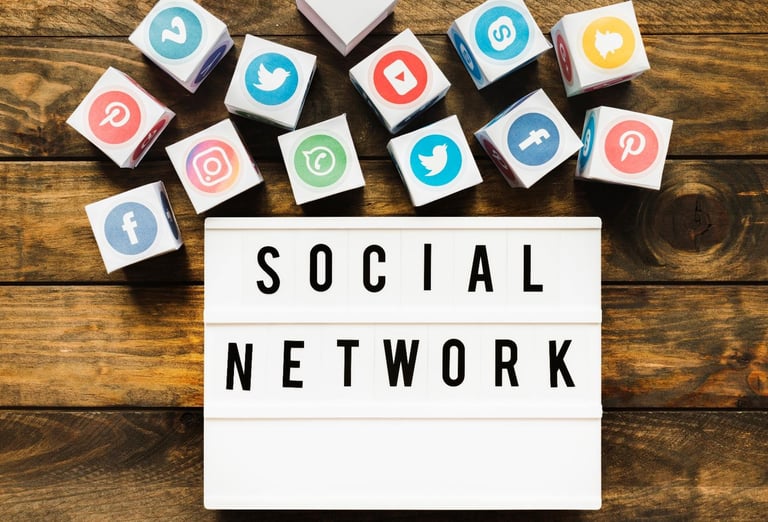
The notebook, the team, the WhatsApp chat — all part of our thinking system.
So yes, the endless pings might make us sigh.
But every chat, every post, every shared note echoes an ancient truth: we’re built to think together.
The Leadership Parallel
That same wiring is alive in every workplace today.
Teams that feel safe enough to speak up, disagree, and ask for help are activating our oldest biological systems for connection and cooperation.
Neuroscience confirms it: psychological safety triggers the same calm, creative state that once kept our ancestors thriving around the fire.
At HUMAN learning at work, this is the foundation for everything we build:
Leadership Lens begins with self-awareness and empathy — the neural roots of trust.
Journey to Team starts with belonging before performance — because groups bond before they excel.
Inside Edge helps people stay calm and connected under pressure — tapping the same social circuitry that kept us alive.
“Before there was learning, there was belonging.”
Connection isn’t an HR trend.
It’s the original survival code.
When people feel safe together, they think better, create faster, and adapt further.
The Ancient Lesson
So yes, another WhatsApp group might make you groan.
But in evolutionary terms, it’s a sign of something profound: the same instinct that got us here is still at work.
Our ancestors’ campfires have become conference calls.
Their stone circles have become strategy meetings.
The need is unchanged.
We didn’t evolve to go viral.
We evolved to go vital — together.
Because in the end, the story of human success isn’t the story of intelligence alone.
It’s the story of connection — the first, and still the greatest, technology we ever invented.
We didn’t win by being the smartest. We won by being the most connected.
New science suggests humans didn’t evolve to be the smartest, but the most connected. From shared parenting to shared learning, connection wasn’t a luxury — it was survival. And in today’s teams and workplaces, that same ancient wiring still shapes how we grow, lead, and thrive.
@ Hello@humanlearningatwork.com